Your warehouse is a genius. It knows much more about your operation than you’d think.
It knows where stock is sitting, where orders are slowing down, where replenishment is needed, which tasks are slipping, and where labour is under pressure.
But, crucially, a warehouse can’t speak. Those answers are all in there, but to get them, you need a skilful eye to build and monitor reports and dashboards.
And, even then, the answers aren’t always obvious. When labour is stretched, what do you prioritise? Which orders are most likely to miss their promise time? Which issue will cost you more if it is left another hour?
These aren’t futuristic questions. The difference is that, by 2030, teams shouldn’t need to dig through disconnected data to answer them.
So, let’s look at the three shifts shaping that future: how teams interact with the WMS, how AI supports better decisions, and how automation fits into the wider operation.
The WMS Will Become the Decision Layer
The traditional WMS gives structure to the warehouse. It records activity, manages workflows, and keeps stock and fulfilment processes under control. And, over the coming years, it will retain its role as the most important layer of your warehouse tech stack.
But the way you interact with it is changing, fast.
AI will play an important role here, especially where it makes WMS data easier for people to question. Instead of digging through screens or waiting for reports, managers and teams should be able to ask direct operational questions.
That is where tools such as ModernLogic’s ChatWMS are ahead of the curve. By empowering non-technical staff to ask questions in plain English, warehouse insight becomes more accessible to the people who need to act on it – and it’s available to use today, not by 2030.
AI Should Complement Human Decision-Making
The value of AI shouldn’t be measured by how much human judgement it removes. Its real value lies in removing any delay to that human judgement.
A WMS that can flag exceptions, suggest priorities, and highlight risk earlier will empower teams to make better decisions closer to the moment they matter. After all, even in 2030, managers will still need to balance customer priorities, service levels, labour availability, and operational exceptions.
But this only works if your data is clean and your systems are well-connected.
The need to start preparing today for the WMS of 2030 couldn’t be clearer. As, too, is the need to prepare for widespread automation.
Automation Needs Systems That Speak the Same Language
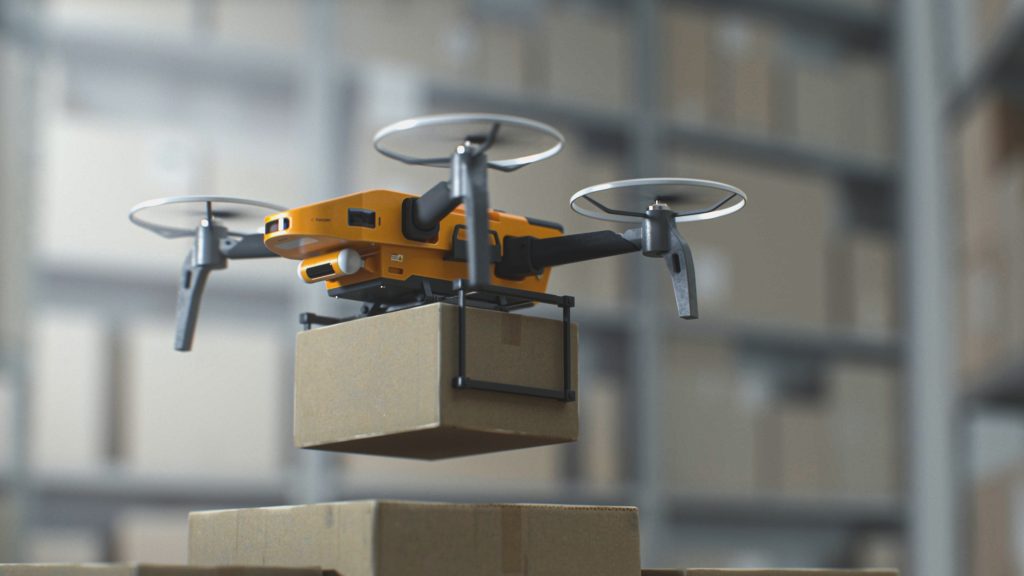
Robots, conveyors, and warehouse control systems are already warehousing mainstays, and automation will have an even bigger role to play by 2030 with the introduction of drones and other forward-thinking tech.
But automation only delivers value when it fits the wider operation. A warehouse cannot answer clearly if its systems are speaking different operational languages.
The WMS, WCS, and labour management all need to work together with your automation. Otherwise, automation may increase activity without improving the decisions behind it.
Looking ahead, preparing for 2030 doesn’t mean replacing everything at once. Instead, now is the time to make practical changes and improve processes, strengthen integrations, and make warehouse data easier for teams and, eventually, AI to use.
ModernLogic helps organisations achieve this through WMS expertise, process improvement, automation integration, and tools such as ChatWMS, helping warehouses move closer to a future where the answers are easier to find, understand, and act on.